DARE TO BE SENSITIVE! 💖

Embrace who you are, especially your kindness
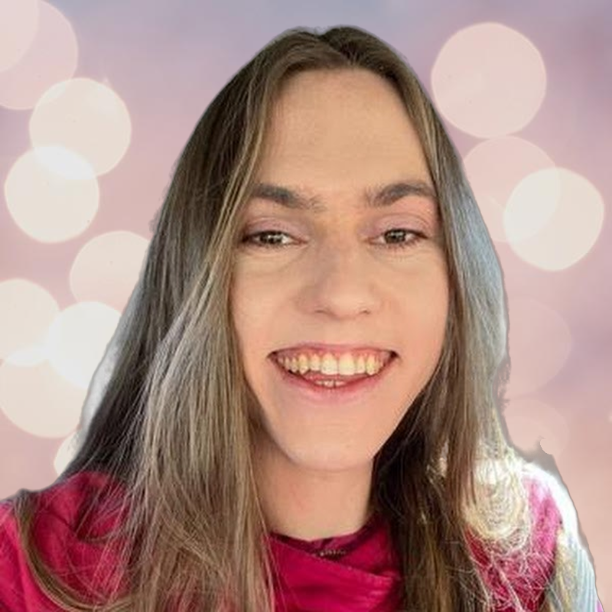
Hi, I'm Phoenix

I write about how human & animal rights are connected. As a trans, autistic, otherwise privileged human who felt I didn't belong to this species, my life's a long journey: 1) from feeling marginalized, to reclaiming my magic; and 2) from ignorance of others' struggles & brilliance, to seeing and showing up for diverse beings with... a growing heart. 💗
 

A vegan heart

Veganism is a belief that everyone deserves to live free from exploitation and violence, including you. I went vegan in my heart, as a child, before I managed to do so in my menu. I already knew that I was one with all beings and that I wanted to stand for a kinder humanity. If you feel at all the same, I hope that my site encourages you explore veganism as an ongoing practice of honesty, care, and action — a journey that begins from where you are, and that deepens your loving friendship towards yourself and your radiant heart. ❤️‍🔥


Your Sensitivity is a Gift


If you're sensitive, you may feel a strong connection with other animals' and humans' struggles, while managing your own. No matter how impossible the world may feel, your heart yearns to make a difference. Power lies within you — to nurture that vision of compassion deep inside you, and bring it to life!


Growing Up as a Sensitive Child: I Loved Animals & Felt Different


Before I had words to understand my sensitivity, I just knew that I was different — my gender, and my empathy for those of us who aren't human.


I started getting picked on at school. They said I was "so gay." That I talked like a girl and I held my lunchbox like a purse. Hurt by the mockery of queer and transgender people, I cried myself to sleep every night. Then, our science class did an animal dissection, and everything changed for me.


As I looked down at the dead body of a squid before me, I realized: Animals are misunderstood too. Animals are bullied and marginalized too.


Animals, including sea beings like squids, have their own joys and pains that are more powerful than we will ever know. Somehow, I always knew: Animals are people too.


Yes, animals look different. They talk different. They have an overall simpler intellect and yet they also have extraordinary mental abilities and physical experiences that we humans lack. They're diverse, like us. How can we draw this line that because we're Homo sapiens and have the power to dominate them, we know for a fact that their feelings, needs, and lives are insignificant, worth so little compared to ours?


I didn't want to know the ongoing abuse that I put a cow family through for my cheeseburgers, or the acute pain of a squid ripped from her home and life in the ocean — any more than other kids wanted to know how they hurt me when they mocked my voice.


But once I started googling how animals are treated, I couldn't deny: We humans did bully them, when we 'farmed' them or 'fiished' them. These words told the story only from a human's view. From animals' view, they were harmed, intimidated, and coerced by a species with more power who perceived them as vulnerable.


Farmed and captured animals seemed as unseen and unloved by humans as I felt as a teased transgender girl, and invisibly autistic person, who stopped even trying to come out or express her real self.


And the saddest part?


My culture, family, school — the ones that loved me, fed me, and ensured my survival — conditioned me to act as if nothing was happening to these supposedly subhuman, far-off individuals who got no love from us at all. 💔

And that made it feel incredibly hard to stand up and say...


Why are we doing everything to animals that we don't want done to ourselves?


I tried saying something a few times, but it didn't go well. I became more silent.


But that's how I'd want someone to stand up, if it were me. ❤️‍🩹 I knew that I was sane for caring, even if I didn't know any vegans yet.


No matter how shy, timid, or distracted I was by my own struggles... someday, somehow, I would not only practice a vegan lifestyle but be an outspoken interspecies activist.


That was my wish from the time I was 11 or 12.


Feeling trapped as a "boy," commented about, misunderstood and alone... I was unable to forget the importance of fighting for some of the most trapped and oppressed of us all.


Fortunately, the unsettling experience of my first animal dissection had a hopeful ending. One of my classmates, an ally to the LGBTQ+ community who had stopped consuming meat, joined me in giving our squid a funeral on the school grounds.


We hadn't known the squid, but we knew that they were special. 🦑


Honoring that squid was perhaps my first time — however small, imperfect, or seemingly not very impactful — of turning the silent heartache of empathy for our animal siblings into something warm, connecting, and visible.


After the queerphobia and speciesism at school shattered my illusion of a just, safe world, I needed to also confront the reality that many humans — as well as other animals — never have the luxury of such a comforting illusion in the first place.


I grew up with wealth and class privilege. I knew a safe, consistent family home, while others faced poverty, abuse, or neglect.


I was a white human child in "the USA" — or part of Turtle Island — the unceded land of Indigenous humans and Native other animals, a place disproportionately toiled on by those who endured enslavement or have been poor, Black, brown, immigrants or refugees, or of course a "farmed" or "working" animal of any number of species.


I was "normal" rather than "the other" because of my weight, my color, my mental and physical abilities, and many other unconsciously favored characteristics... and not just because I was human.


How many times had I been the bully, an intimidating or overpowering one — even if I had no intention or desire to be that way?


Once it became obvious that I was transgender and "weird" (later revealed as autistic), I could finally taste the importance of social fairness on a deeper level. But that didn't mean I was ready to realize all oppressions right away.


Over 20 years later, I'm still learning: to embrace each new difficulty in my life as a compassion-building gift. These gifts help me better understand others' struggles, and commit to their liberation.


I'm still learning: that we don't have to never feel whole, just because the world is unjust. The more than I tune in to the wonderfulness of oppressed others — the more than I collect LOVE in my heart for us — the more clear and motivated I become in seeking to be helpful.


And so I have sought to alchemize the confusing sorrow of my youth as a lonely autistic vegan transgender girl. I have been a quest to engage humans in conversation around self-liberation and finding veganism in our hearts.


But enough about me. I want to know your story.


What have been your gateways to caring?


When have you felt like something wasn't right about the way we relate to other animals? To each other?


Did you have hard experiences in your life that made you feel like you didn't belong, like you were unheard or oppressed? 


Did you ever feel you were treated "like an animal," or looked down upon as less than human?


And did you have moments when you realized that an animal actually shouldn't be treated like that either — that we all deserved respect?


When did you see others — of your own species, and beyond — going through suffering or attacks? When did your heart hurt the most?


And when did you connect it all together, and have some idea that we should care for all, oppose all forms of cruelty, and meet the basic needs of the many, not the excesses of a few?


What made you care? 💛❤️‍🔥


Your Sensitivity Is a Strength


First of all, thank you for reading this far. Taking in the horrors of how we sometimes treat each other is not easy. I commend you having the courage to feel. ❤️‍🔥


As a deeply-feeling young person, you may have faced some obstacles to really embracing your sensitive self. I know that for me, the world felt overwhelming. Pressure to "just be normal," and "stop being so sensitive," made it hard to become my best.


Every being on this planet is uniquely sensitive. Different things bother and inspire us... We can all learn from one another's special ways we perceive the world.


But if you ever thought you were generally more sensitive... you likely are.


Highiy sensitive people has described the 15-20% of us with the highest sensory processing sensitivity. Animals can have higher sensory sensitivity for their species, too!


Yes, it's true that we can be more easily stressed or traumatized, and are therefore more vulnerable to mental struggles as well as physical conditions that get agitated by stress.


But on the other hand, our rich inner world — shaped by being such a vulnerable and sensitive being — can hone our ability to be highly sensitive towards others.


Your sensitivity may draw you to creativity, detail-oriented study, closeness with nature, helping or caregiving, spirituality, or healing with those around you.


And yes, we often have felt misunderstood.


In my personal perspective, here are 7 examples of ways that our sensitivity can conflict with what society wants us to be:


  1. We may socialize in a unique, personally authentic way, instead of following the expected patterns of how to talk or relate.
  2. We may develop passionate niche interests that deeply speak to us. Our range of what we love can seem selective, alternative.
  3. Our strong reactions to the world around us can give us more of a need to customize our environment to maintain calm.
  4. We grow more dependent on the specific routines that ground us. Fixed in our favorite ways, we may need help shifting gears or coping with a sudden change.
  5. We tend to move our bodies differently — fidgeting, pacing, playing with objects, or repeating words—instinctively finding ways to stay regulated.
  6. We fail to focus on boring stuff. Focus flows to what's meaningful, emotional, or alive. Restfully tuning out, we engage deeper with some details whilst other details escape our attention.
  7. We may seek continual stimulation and connection through energized talking or spontaneous behavior that is beyond what's expected.


Okay, so get this: The first 5 traits that I described are used to assess for autism. 6 and 7 describe ADHD.


My list above loosely matches the DSM-5, a manual of disorders. However, I used words that capture these traits in an appreciative light — not as "symptoms," but as strength through diversity.


And yes, strength through sensitivity!


Autism, ADHD, dyslexia, and other types of what we're now calling neurodivergence... they are all correlated with being highly sensitive. They also have carried more of a stigma than just being sensitive. So, I think that by de-mystifying and celebrating these ways of being, we can better uplift the repressed sensitivity in all of us — and unlock the hope that that that offers for creating a kinder world.


I'm still working on this section of the homepage, so forgive me for rambling. 🙃


"But Phoenix," one might object, "how do I draw the line between healthy diversity and disorder? And how autistic or ADHD is enough to count?"


Believe me, I have navigated such feelings of uncertainty a lot on my journey. But in the end, there are compelling reasons why neurodiversity is worth embracing, and we should be free to self-identify.


First, autistic and ADHD minds existed long before doctors started labeling them as such.


It isn't fair for doctors to gatekeep us understanding and proclaiming who we are, or say we're only valid if we've paid (potentially a lot) to have them inspect us.


The whole premise that we have to be evaluated to prove how our minds work reminds me a lot of ways animals are treated — like subjects of human curiosity, classification, and control.


Undiagnosed autistic and ADHD people can often tell that they're a part of one or both of these communities, simply through learning about the conditions over time, and interacting with others like them.


Self-discovery can sometimes feel more empowering than a more pseudo-objective approach of seeking one doctor's or clinic's opinion via a diagnosis — which will always be limited anyway.


Also, self-discovery encourages self-trust! Self-trust is something we've often had stamped out of us too much already, growing up with minority minds in a society that expects neurotypicality and makes us constantly doubt ourselves.


As for the disorder issue, a lot of our autistic/ADHD struggles really do come from pressure — pressure to live up to standards that aren't necessarily healthy, reasonable, or the one right way.


For example, human lives haven't always been so artifically structured, where you had to work x hours a week to make y money and survive "independently." This is linear productivity. This is separation of work and family. What about a society that is slower-paced, more nature-attuned, and welcoming of diversity? Societies can also be more collective in the sense that everyone contributes what they can, everyone takes what they need — that way, neurodivergent humans, and those with any type of disability, don't wind up homeless simply for doing their best and contributing uniquely like everyhuman else.


Modern technology can also be extra disruptive to the sensitive.


As a young adult, I struggled to be motivated to get a job. Most employment opportunities seemed stressful, misaligned, and indignifying — such as taking the bus to go work at a crowded corporatey grocery store that sells dead animals and wants all the redundant sales tags to be perfect.


But while I might have been a defective 9-to-5 worker under capitalism, imagine if my "work" could have consisted of watching a few children, picking berries, and serving as some kind of village healer or historian given my knack for writing and meditation. You can start to see how an autistic ADHD person like myself might seem a lot more functional in the right environment.


In this sense, highly sensitive humans help to expose the imbalances of modern living. Imbalances that probably aren't serving any of us. And that's kind of cool! 


Think of it this way:


  • Is it wrong to have a different way of socializing, moving, engaging in interests, sensing the world, or forming routines? Imagine an animal who walks, trying to fix one who swims. Both are important to the ecosystem.
  • Is it bad to be less in sync with societal norms, but extra in touch with your sensitivity?
  • What if you were wired for creative richness, instead of speed?


The neurodiversity movement helped me recognize that while my deeply impressionable mind finds socializing and everyday life complex, for every weakness I have a power. I'm as brilliant and "disordered" as the next person, and my challenges are good for me.


So whether you're sensitive like me, or whether you have a steadier, less reactive nervous system (which is also a tremendous beautiful strength and very needed in this world), I hereby give you permission to be yourself!


Like a lot of divergent humans, I learned to unconsciously hide any tendencies I had that would be labeled weird. This caused stress, confusion, and burnout.


It helps now to understand that the majority of humans really are more wired for fitting in than I am. Self-adjusting to norms doesn't feel quite so painful, or forced, for many neurotypical people.


Reducing how much I'm hiding, and beating to my own drum, does wonders for my health.


Autistic ADHD liberation, in my late 20s to now 30s, has felt similar to my earlier transgender girl journey of escaping a traditional male gender role. My femininity was a perfectly natural, acceptable part of me, and so was my sensitivity. Feeling more like my true self, I found freedom!


Contrary to a misconception, autistic people are not necessarily less empathetic or emotionally intelligent. While some autistic people agree with that description, others exhibit the exact opposite: hyper-empathy, even acting like accidental therapists to those around them...


Furthermore, many autistic simply relate better to fellow autists, ADHDers, and other like-minded folks. We might be a little weak at understanding neurotypical people, but neurotypical people are also a little weak at understanding us. Some autistic people, I'll add, certainly excel at having concern and empathy beyond just the fraction of sentient beings who are human!


So, a more accurate way to think of it might be that we all have a combination of social gifts and social challenges. Autistic people simply connect and feel in different ways, different from what neurotypical human society expects.


Society got autistic people all wrong.


And we got animals all wrong.


Maybe you see now why I'm passionate!


We were assumed to lack full emotion, true connection, complete inner richness — simply because we're different.


So, whether you're neurodivergent, sensitive in your own way, or have a more resilient and steady nervous system and consider youself an ally... give love to your beautiful way of being, your irreplaceable blend of softness and strength.


And please, I hope you will nourish your sensitivity towards people of other species, in this society that teaches us speciesism.


We are taught to look down on individuals like chickens, pigs, cows, and fishes. We think we need to, because for so long we have exploited them for our material interests - just as we often have exploited each other. Most of us today enjoy a miraculous degree of abundance and choice, along with nutritional knowledge to have healthy vegan communities. We actually kill a lot more animals than our ancestors did due to consumerism and overabundant lifestyles. As beings who know what it is like to suffer, trying to remove our support for the oppression of animals is the least we can do to make things right.


Much of what I have written on this homepage connects to disability justice, understanding that society is set up to favor humans with certain mental/physical abilities, while being less accommodating towards anyone who lacks those idealized abilities and communication forms.


Everything I write is limited by being a white U.S. American from an upper middle-class background. I must work vigilantly to be more supportive of humans who are Black, Indigenous, and people of color, who are immigrants or refugees, who experience poverty or long-term homelessness, who have suffered from the colonization and imperialism that my country has imposed on others, and more.


Beautiful diversity has been pathologized, objectified, and/or devalued in all sorts of ways... whether it's our age, sex, looks, cultural background, or of course species. I am starting to learn that so much of this is because of economic interests, as well as primordial prejudice trying to keep us safe. It's a story of some humans subconsciously trying to protect their power by looking down on others in a certain way, inventing creative ways to make it seem justified.


Healthy diversity has been pathologized, and we end up feeling pressured to conform to a high-stress consumer lifestyle, which hurts animals and ourselves. It's time to realize that the problem is not


In my own life, I found that my sensitivity to seeing an animal in pain became inseparable from my own autistic transgender girl experience.


How could I support harming other misunderstood creatures, when I myself was a misunderstood creature?


By "daring to be sensitive," we can build new norms of kindness and create a tipping point for animal rights—just as the tipping points for 2SLGBTQIA+ communities and neurodiversity freed me.


Your sensitivity can be a source of ethical leadership, which future generations will thank you for.


By embracing who we are, we really can change the world!


Thank you for listening to my story. If you're resonating with this and want encouragement to play your part in a kinder world, read on!


Create Beautiful Habits, and Live Your Dream of a Kinder World


Maybe you resonate with what I'm saying, but there are things holding you back from aligning your life with the better world for all that you believe in. I hope that my story helps.


After feeling hurt by the comments at school and injustice to animals, my preteen self longed for innocence and fun. Through exploring an online game called Neopets, I found childlike joy again. On Neopets, I could be anyone I wanted. But while I saved virtual creatures on my computer from lava, I struggled to take a single step toward my real goals.


Have you ever been unable to stop binging shows, or craving endless distractions—feeling pulled away from your purpose?


You may have even felt like you were wasting your life while a secret passion gnawed at you.


This can be a very difficult, unsettling feeling to sit with. I've found that, over the course of my journey, I keep facing it over and over. While it's tended to get less intense over time (thanks to forming healthier long-term habits), I nevertheless need to keep noticing where my life feels off, so I can continue growing. Through my meditation practice, I've learned to love the discomfort, like it's the ache of a good massage.


If you ever get majorly hooked on stuff that feels bad for you... it's not your fault!


Sensitivity can make us easily addicted. That's especially true when we're rising above hardship. And there really are big tech and other companies out there essentially aiming to addict us. But you aren't wrong for soothing yourself. TV and gaming aren't wrong. It's wonderful how you stay in touch with desirable feelings—joy, wonder, relaxation, playfulness, excitement, adventure, inspiration—even through habits that you may feel ready to let go of, or do less of.


If your activities have been feeling like a dead end, maybe you just need a little support to find ease in what feels meaningful.


I struggled for years with what I considered to be a true addiction to that online pet game, before finally leaving it for good. Clearing away the old habit, it got easier to immerse myself in what felt like my true calling—projects that aim to benefit real people and animals.


Even if you have a long journey ahead, you've come far! Have you ever made a list of your accomplishments, big and small, that remind you of your power to help yourself and others?


Here are some of the high points on my list:


  • As a teenager, I went vegan and whole-food plant-based—reducing how much animal suffering I would contribute to over the rest of my life, while also empowering my personal health. And fueling this vision of a kind, healthy humanity, which I would someday share with others.
     

  • I changed my name and came out as a trans woman. I felt more confident and deserving of happiness.
     

  • I found something that was effective at lowering my lifelong social anxiety (The Lefkoe Method). That made it easier to start dancing in public, join a public speaking club, and go to theatre school. I then trained in the Lefkoe Method and other forms of life coaching, enriching my personal healing and my ability to support others in theirs.
     

  • I survived a few years of houselessness living from a car. It helped me feel at least somewhat more in touch with the struggles of poverty, classism, safety, and housing insecurity that affect so many. 
     

  • I worked at an animal rights conference, gathered signatures for a cage-free law called Prop 12, did field marketing for a plant-based meat company, and I helped lead communications for a campaign to end slaughterhouses and fur. I participated, first on a more occasional volunteer basis and then through jobs like those that occupied more of my time.
     

  • I went from terrified of sharing my writing, to blogging prolifically on Medium and Reddit. Over time, I developed courage and clarity to focus on saying what I really wanted to say about veganism, animal rights and human rights. I have slowly been developing a better relationship with checking comments and safely connecting with those I write to.
     

  • I embraced neurodiversity and disability pride, winning at our own games and loving being different. It has not been easy! I overanalyzed. I felt like I was broken. I felt so misunderstood, it was a lot to bear. But I'm so glad I can keep redirecting that into fuel to better understand others.
     

  • I kept learning over time about the experiences of different animals and human groups, dissolving different prejudices which felt healing to my soul.
     

  • I helped accompany and care for an elder with Alzheimer's. Caregiving can feel like a lot to show up for when caring for myself feels complicated, and I loved showing up for my dad. It helped me continue to think about disability liberation, and along the way I increased my acceptingness of aging, disease, and death, which helped to do while I was in my early 30s instead of having to wait until much later.to make some peace!
     

  • Lowering the dial on Netflix, I dove into self-taught schooling and book reading. I started to revive my childhood love of learning, especially now that I can direct much of my learning specifically towards the goal of better advocating for others.
     

  • My struggles with long covid and chronic pain drove me to master mind-body work like DNRS, Joe Dispenza meditation, laughing on purpose, and expressive writing. I practiced daily to improve my health and reach more goals.


If any of these life experiences are something you would like to connect with me around, feel free to reach out to me! :)


What beautiful little habit can you practice today, to step towards a kinder future? 

Reach Out to Me if I Can Help With Anything


You feeling unconditionally supported—my dream!


Lately I've been focused more on figuring out my writing path than the coaching one, but I LOVE listening to people and having deep 1-on-1 conversations. It's why I've served in a coaching role in the past and may again in the future. Here's my coaching page where I had written more about the "personal growth games" I trained in, which could be useful in one's journey from marginalized to magical and disconnection to compassion.


I'd love to help you if I can answer any questions or informally support you with something related to the content of this website. :) My email is uberpath at gmail.


Photo credits on this page: Benjamin Wedemeyer via Unsplash; Alan via Adobe Stock; Erik Kartis via Pexels.